Current BMS Solutions Are Flying Blind
Traditional BMS
- Voltage monitoring
- Coulomb counting
- Simple thresholds
- 60-80% accuracy
Data-Only Solutions
- Black-box ML
- Requires big data
- Can't explain why
- 85-90% accuracy
What You Actually Need
- Internal state estimation
- Physics-based predictions
- Works from day one
- 98.7% accuracy


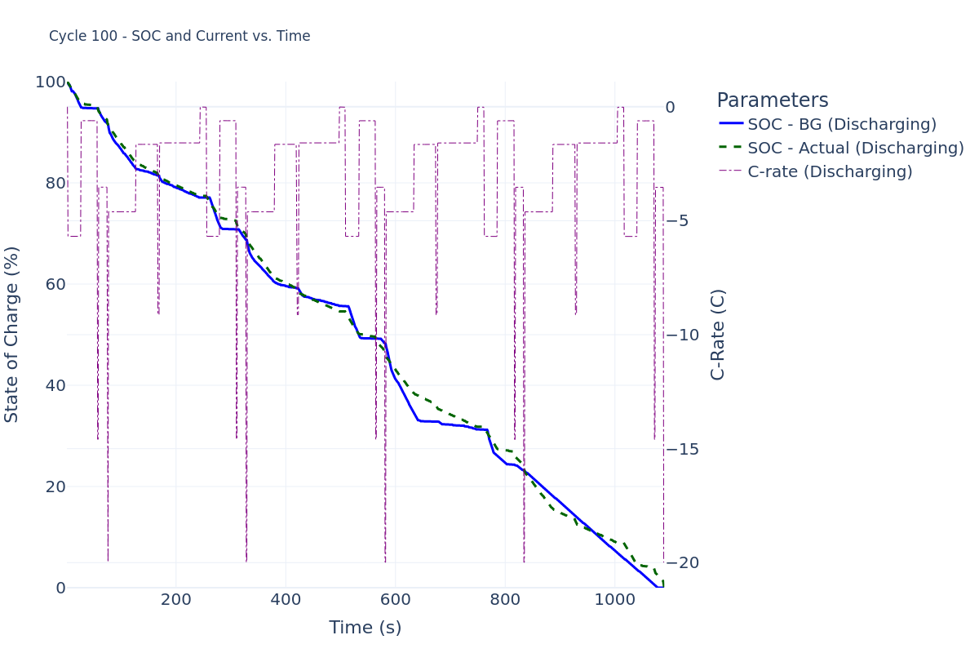
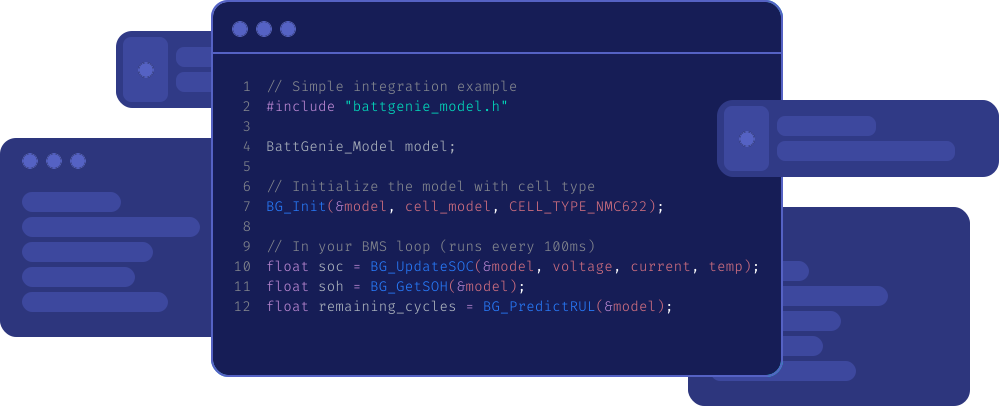
Software: Transform Any Chip into a Physics Lab
Integration Options Grid, Supported Platforms
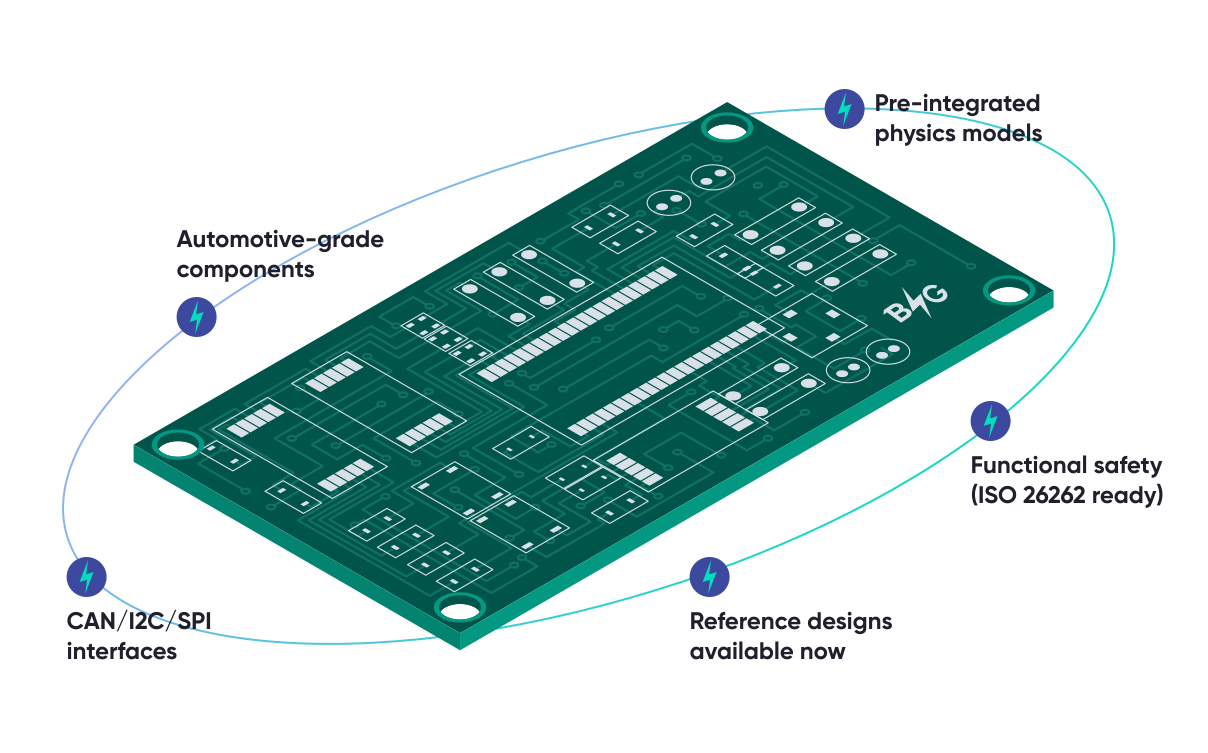
Hardware: Complete BMS Solutions with Integrated Physics
BattGenie BMS Boards
Coming Q1 2026
Custom BMS Development
End-to-end services
Requirements analysis, Hardware design, Model integration, Testing & validation, Production support
12S Automotive
- EV-grade
- ASIL-C capable
- Active balance
- $45 @ 10K qty
16S Industrial
- BESS-ready
- Modular
- Remote update
- $65 @ 10K qty
4S Consumer
- Compact design
- Cost-optimized
- I2C/SMBus
- $12 @ 10K qty
Why Our Hardware?

First BMS with true electrochemical models onboard

Predict failures 72 hours in advance

Self-calibrating to cell variations

2x battery life with same cells
From Prototype to Production in 8 Weeks
Week 1-2: Discovery
- Assess current BMS
- Define requirements
- Select integration path
- Deliverable: Integration plan
Week 3-4: Development
- Model optimization
- Platform integration
- Initial testing
- Deliverable: Alpha release
Week 5-6: Validation
- Hardware-in-loop testing
- Accuracy validation
- Performance optimization
- Deliverable: Beta release
Week 7-8: Deployment
- Production release
- Documentation
- Training
- Deliverable: Production-ready BMS

Venkat Subramanian
CTO, Chief Scientific Advisor, and Co-Founder

Prof. Venkat Subramanian is currently the Ernest Dashiell Cockrell II Professor of Mechanical & Material Science Engineering at the University of Texas, Austin.
His research interests include energy systems engineering, electrochemical engineering, computationally efficient algorithms for state-of-charge (SOC) and state-of-health (SOH) estimation of lithium-ion batteries, multiscale simulation, and design of energetic materials, kinetic Monte Carlo methods, model-based battery management system for electric transportation, and renewable microgrids and nonlinear model predictive control. Prof. Subramanian was awarded the Dean’s award for excellence in graduate study in 2001 for his doctoral research.
He is a Fellow of the Electrochemical Society and a past Technical Editor of the Journal of the Electrochemical Society. He was also the chair of the IEEE Division of the Electrochemical Society. His codes for Lithium-ion batteries are the fastest reported in the literature and his algorithm for solving index 1 nonlinear DAEs is the most robust compared to any other algorithm reported as of today.
Prof. Subramanian received his B.Tech. degree in Chemical and Electrochemical Engineering from the Central Electrochemical Research Institute (CECRI), Karaikudi, India, in 1997 and the Ph.D. degree in Chemical Engineering from the University of South Carolina, Columbia, SC, USA, in 2001.


Manan Pathak
CEO and Co-Founder
Dr. Manan Pathak is the Chief Executive Officer and co-founder of BattGenie.
He earned his PhD at the University of Washington, where he obtained his graduate thesis on model-based Battery Management Systems. He has 7+ peer-reviewed publications with over 300 citations, and extensive experience with physics-based battery models, numerical methods and derivation of optimal charging profiles.

Chintan Pathak
CPO and Co-Founder
Dr. Chintan Pathak is the Chief Product Officer and co-founder of BattGenie.
He earned his PhD from the University of Washington and he obtained his graduate thesis on optimal locations of battery charging stations in the state of Washington. He has over 13 years of experience in software engineering and embedded systems.

Akshay Subramaniam
Battery Modeling Scientist
Akshay Subramaniam leads electrochemical model development and identification tasks at BattGenie. He also contributes towards BMS algorithm development and validation, and helps maintain our models, databases, and testing pipelines. He received his Ph.D. from the University of Washington during which he gained extensive experience in the development of control-oriented electrochemical models. He has 10+ peer-reviewed publications and is proficient in several aspects of battery systems engineering including numerical simulation techniques, optimization for design and fast charging, parameter estimation, and battery data analysis.

Taejin Jang
Battery Simulation Scientist
Dr. Taejin Jang is a Battery Simulation Scientist at BattGenie. Dr. Jang received his Ph.D in Materials Science from University of Texas at Austin and an MS in Chemical Engineering from UW. He also has BS and MS degrees in Materials Science & Chemical Engineering from Yokohama National University in Japan. He spent three years in the automotive devices industry at Samsung Electronics. He has 7+ years’ experience in battery modeling and simulation, encompassing Li-ion and next-generation batteries.

Bing Syuan Wang
Senior Battery Software and Data Engineer
Bing Syuan Wang is the Senior Battery Software and Data Engineer at BattGenie.
He earned his Masters in Electrical Engineering from the University of Washington. He has over 6 years’ experience in software engineering and in working with battery data.
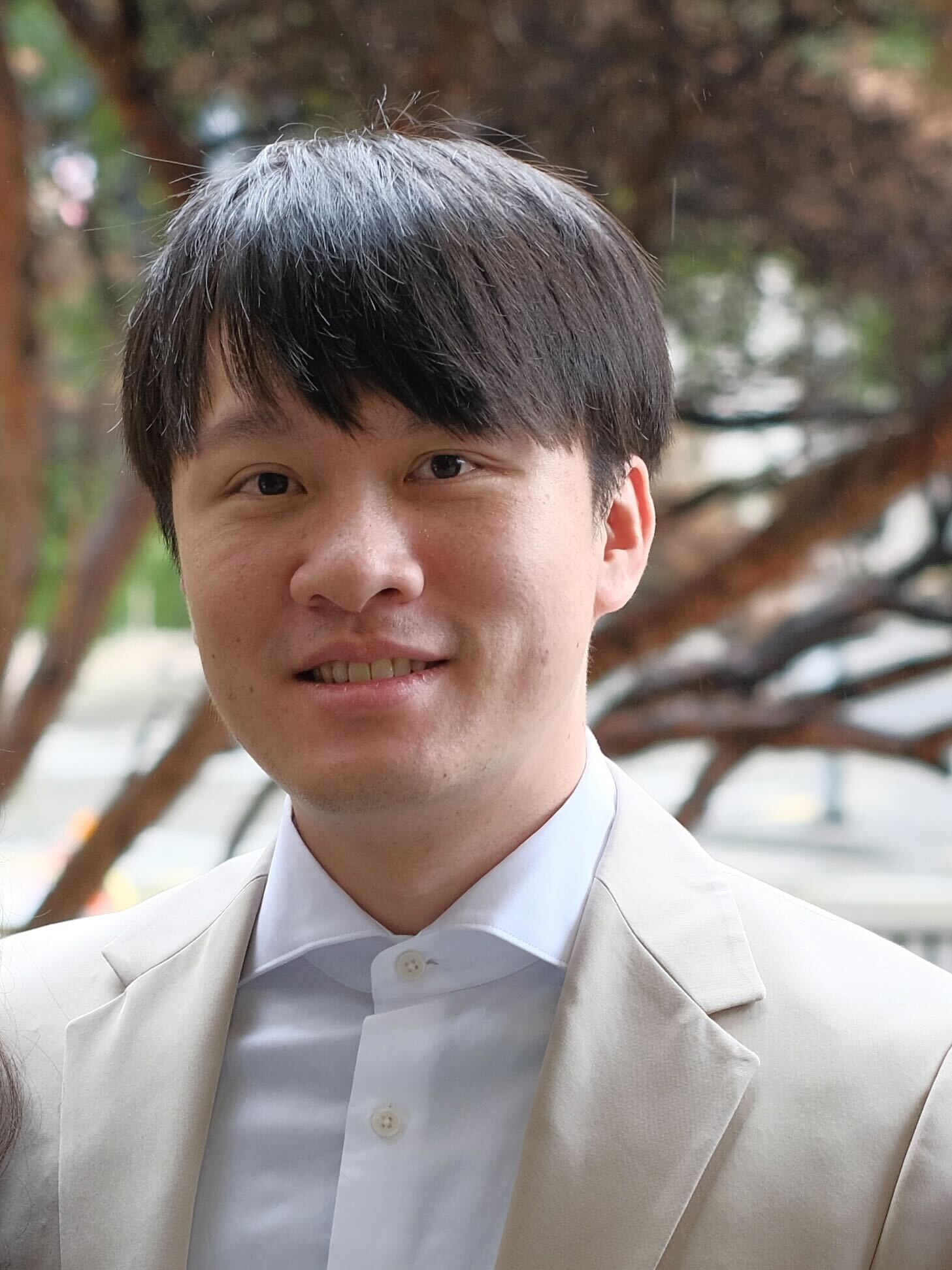
Aditya Parsai
Fullstack Software Engineer
Aditya Parsai is a Fullstack Software Engineer at BattGenie. He graduated in Civil Engineering from IIT(BHU). With 8 years’ experience, he contributes to helping businesses succeed in the digital space by staying attuned to the evolving tech landscape. His work spans from front-end development to back-end system engineering, ensuring smooth integration and functionality. He recognizes the importance of storytelling and is adept in translating complex ideas into user-friendly interfaces to enhance user experiences.